52 Weeks of Flavor: Replacing Sad Desk Lunches With a Rotating Food Truck Program
At 11:58 a.m. in almost any South Jordan office park, you can watch the same scene play out. Employees grab their keys, check their phones, cycle through the same five lunch options, and disappear for 90 minutes.
They’re not being lazy. They’re just trying to avoid another soggy turkey sandwich from the breakroom or ordering the same thing they’ve already had three times this week.
After coordinating more than 15,000 food truck events across Salt Lake, Davis, Utah, and Weber counties, I’ve seen this pattern repeat itself again and again: the lunch exodus, the empty office, the slow return around 1:30 p.m.
What often gets overlooked is what lunch really represents. It’s not just about food. It’s about connection. It’s about whether your new hire in accounting ever meets someone from production. Whether people actually take a break together. Whether half the team spends their lunch sitting alone at their desk while the other half sits in traffic on Redwood Road.
The “sad desk lunch” isn’t just uninspiring. It’s also expensive. And more Utah companies are realizing there’s a better way.
Why Utah Companies Are Replacing Traditional Office Catering
Traditional office catering tends to fail for predictable reasons. Food arrives early and sits under plastic wrap until it’s lukewarm. Sandwich platters blur together into the same mayo-heavy experience. By 12:45 p.m., what’s left is wilted lettuce, soggy tomatoes, and very little enthusiasm.
Most catering setups are transactional. The food gets dropped off, and the vendor leaves. No cooking. No energy. No reason for employees to linger or engage. People eat because they’re hungry, not because they’re excited.
There’s also the issue of variety. Many catering contracts lock companies into a limited rotation. Italian one week, Mexican the next, then back to Italian. After a few months, the novelty wears off, and so does participation.
Food trucks change the dynamic entirely. You see the chef cooking. You smell Korean beef grilling. You watch fresh waffle batter hit the iron. When a truck pulls in at 11:45 a.m., the line forms not because people are starving, but because they’re genuinely interested in what’s being made.
At Food Truck League, we manage a network of more than 200 vetted food trucks across Utah. That’s not 200 versions of the same sandwich, it’s 200 distinct food experiences. Thai curry one week. Texas BBQ brisket the next. Belgian waffles for brunch. Wood-fired pizza or Hawaiian poke bowls after that.
That variety isn’t just nice to have. It’s the reason employees stop leaving the parking lot.
The 52-Week Rotating Office Food Truck Catering System
A successful food truck program is intentional. We track far more than food quality. We track speed, reliability, popularity, and consistency across thousands of office lunch events.
Every truck in our system comes with real data: How quickly can they serve 150 people? Do they show up on time in January snow? Can they accommodate dietary restrictions without slowing down the line? Which trucks get repeat requests versus polite silence? To name some.
This matters because novelty fades fast. Bring the same taco truck four times in three months, and it stops feeling special. Bring a truck that takes 10 minutes per order, and employees spend their lunch break standing in line.
Weekly food truck lunches solve both problems when they’re properly managed. We rotate trucks by cuisine, speed, and past participation data. No truck appears more than once every few months unless it’s specifically requested. We balance comfort food with lighter options and avoid repeating similar menus back-to-back.
For companies running weekly programs, this creates genuine anticipation. Employees know which day is food truck day, but not which truck is coming until the week before. That small sense of surprise drives engagement far better than any standing “Taco Tuesday” ever could.
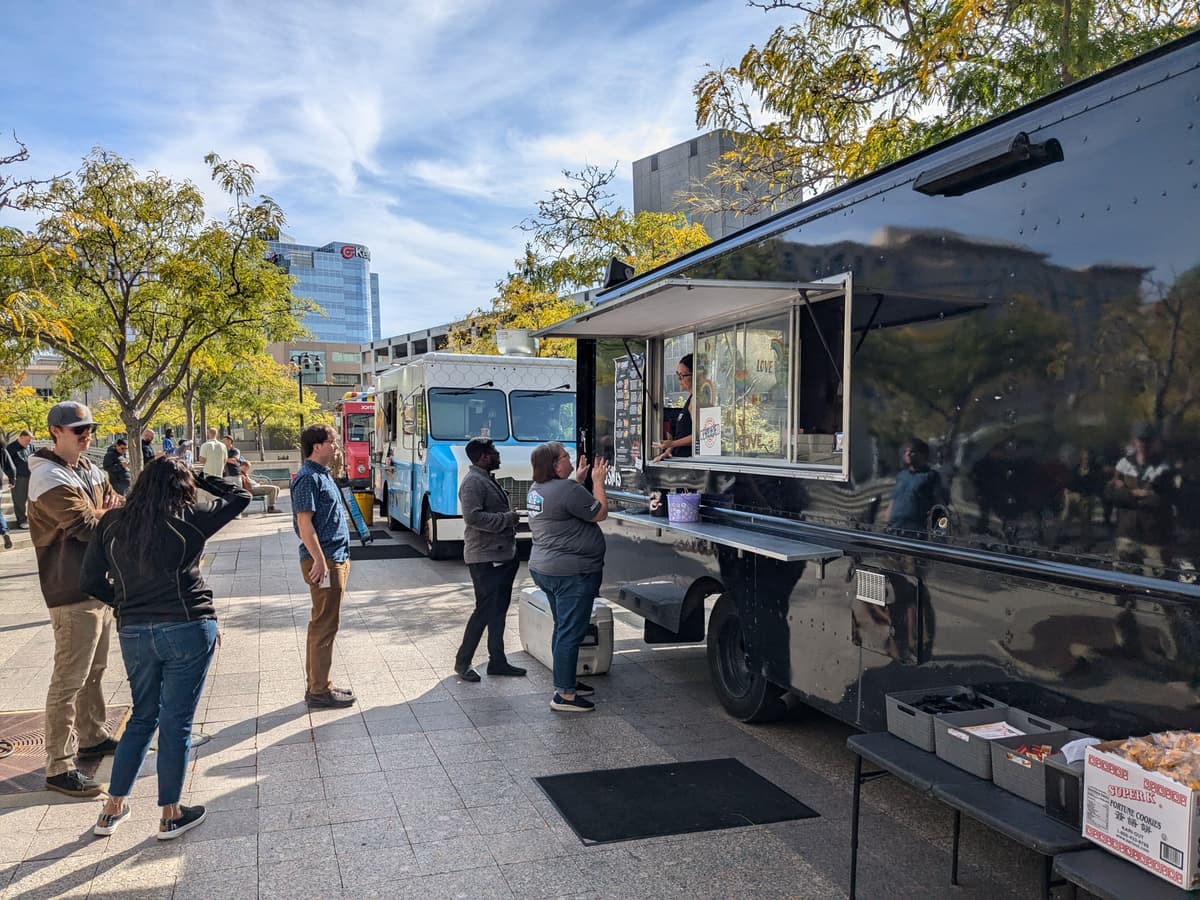
What Variety Actually Looks Like
Here’s a real example from one of our most successful recurring programs. On a typical Tuesday at the Gallivan Center, you might see:
- Adris Cafe with Mediterranean bowls with fresh hummus and falafel
- Silver Moon Taquiaria and their street tacos and customizable burrito bowls
- Bacio ‘Italia has wood-fired pizza and authentic Italian paninis
- Vostok Burger bringing their gourmet burgers with creative toppings
- Rickle’s Sandwiches serving up fresh deli-style sandwiches
- Comfort Bowl scooping their Asian fusion rice bowls and ramen
- Forma Coffee and Bakery pouring specialty coffee drinks and dishing fresh pastries
Notice the balance: hearty proteins alongside lighter bowls, familiar comfort foods paired with more adventurous options, and multiple vegetarian and gluten-free choices throughout.
That’s seven distinct cuisines at a single lunch event and the following week brings an entirely different lineup. This level of variety simply isn’t possible with traditional catering. Food trucks allow you to tap into Utah’s entire mobile food scene with dozens of specialized cuisines prepared by operators who have spent years perfecting their craft.
The outdoor element matters more than most people expect. Employees don’t just grab food and head back to their desks. They eat outside. They talk to coworkers from other departments. They take a real break.
Understanding Our Service Options
We offer two primary models, and understanding the difference helps you choose what fits your culture and budget.
Catered Options
We handle everything from negotiating pricing to coordinating logistics. The truck arrives prepared, serves a guaranteed number of meals, and leaves. No cash. No card readers. No individual transactions. Because payment isn’t involved, service moves super fast. Lines stay short and lunch breaks don’t get eaten up by waiting. Catered programs send a clear message: this is a company-provided perk. Employees notice when their employer invests in their daily experience.
Self-Pay Options
Trucks bring their full menu and offer a variety of options at differing price points. Card or cash payment accepted at the truck at the time of order. Self-pay programs are also seen as a company perk. Employees appreciate not having to leave while still being able to enjoy top notch cuisine.
Culture & Business Impact
From a productivity standpoint, the benefit is simple: employees who eat on-site take shorter lunch breaks. It isn’t because they are rushed. But because they are not spending 40 minutes in traffic commuting back and forth. They actually have more time to relax and eat their lunch and not feel like they have to inhale it.
Many office managers tell us their workplace used to feel empty from 11:45 a.m. to 1:45 p.m. After introducing a weekly food truck program, that window shrinks dramatically. Phones get answered. Teams stay engaged. Small issues get resolved instead of waiting until mid-afternoon.
Retention is harder to quantify, but it shows up in stay interviews and exit conversations. People don’t leave a job because of lunch, but they do stay longer at companies that clearly care about the day-to-day experience of their employees.
Recruiting is where this really shines. Along the Wasatch Front, companies are competing hard for talent. Compensation isn’t the only differentiator. Culture plays a crucial role as well. “We have food trucks every Wednesday” is memorable. It gets mentioned in interviews, Glassdoor reviews, and casual conversations.
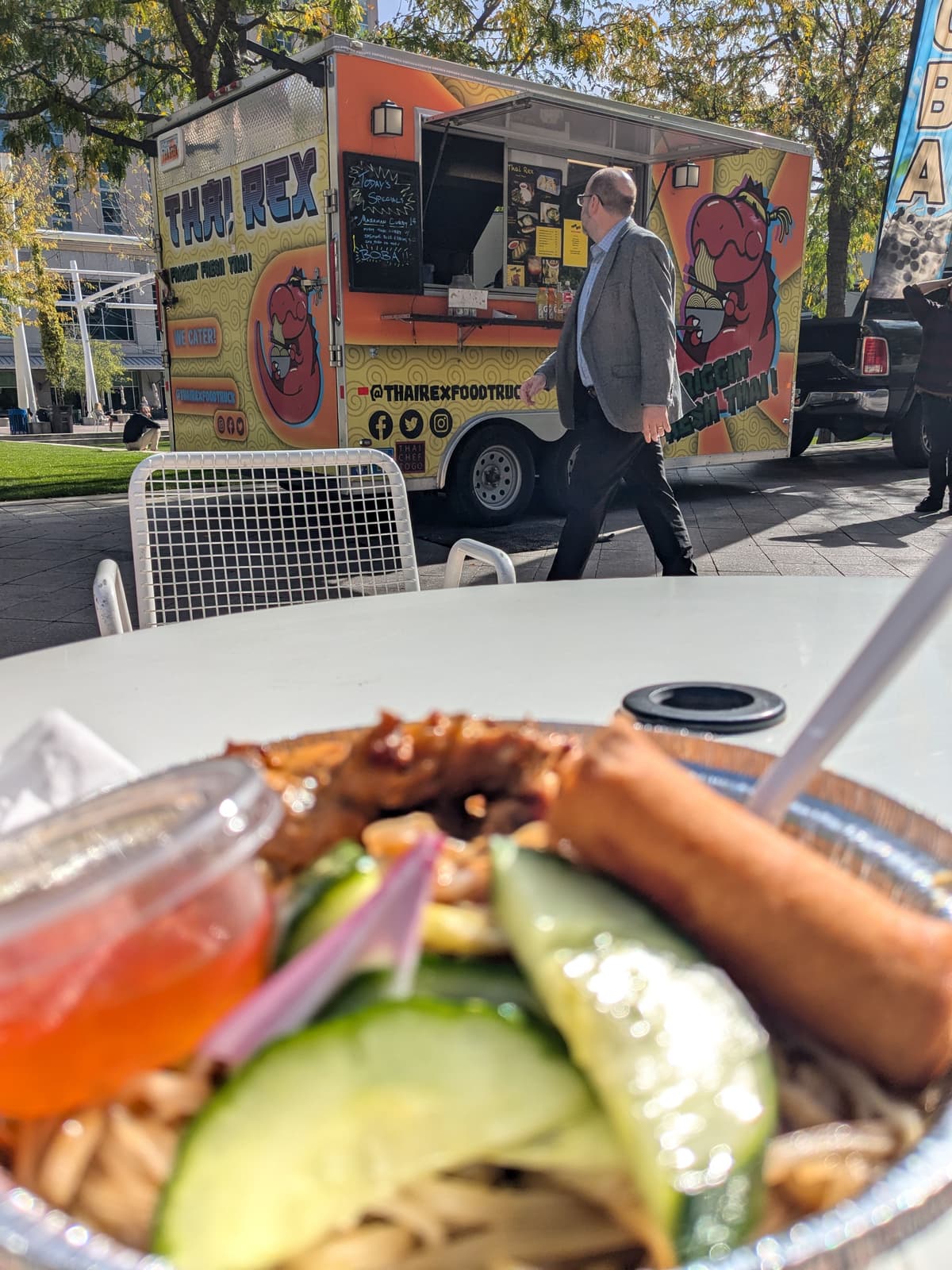
How to Launch a Program Without Stress
If you’re responsible for making this happen, here’s the practical checklist:
1. Choose one day per week to start. Tuesdays and Thursdays tend to work best.
2. Decide between catered or self-pay based on budget and headcount.
3. Partner with our consultants instead of booking trucks individually.
4. Announce the program ahead of time so employees know what to expect.
5. Observe the first event and note line flow, timing, and participation.
6. Survey your team after three events and gather feedback.
7. Commit to at least two months before evaluating results.
- The most common mistake companies make is trying to manage everything internally. Vetting trucks, negotiating pricing, handling cancellations, and tracking dietary needs takes time. Working with our consultants lets you focus on your actual job while someone else handles the logistics.
Your Team Deserves Better Than Meal Prep Mondays
Think about the best lunch you’ve had at work in the past year. It probably wasn’t eaten while answering emails. It was the barbecue brought in for a celebration, or the day everyone actually sat down together. That experience doesn’t have to be rare. It can be weekly.
We’ve built food truck programs for offices with 15 employees and offices with 500. The size matters less than the willingness to try something better than the same five restaurants or another desk lunch. Start small. One truck. One day. See what happens when your team doesn’t have to leave for lunch and they actually get time to enjoy it together.
Ready to get started? Visit Food Truck League or reach out to discuss what a rotating food truck program could look like for your office.
Let’s replace the lunch exodus with something better.
Frequently Asked Questions
How many food trucks do you need for an office lunch program?
For a single-location office, one carefully selected truck typically serves 200+ employees efficiently during a 2-2.5 hour window. If your on-site population exceeds 300 people, or if you want to offer more variety, multiple trucks can make sense. At the Gallivan Center downtown, we regularly coordinate 6-7 trucks to serve the surrounding office buildings.
What's the minimum employee count for a food truck program?
We typically recommend at least 300-400 employees in the location or nearby buildings. However, smaller offices can still succeed with the right approach, focusing on catered programs with guaranteed meal counts rather than self-pay models. Every situation is unique, which is why we offer free consultations.
How far in advance should we book?
For one-off events, 2-3 weeks minimum. For establishing a recurring program, 4-6 weeks allows proper planning and truck coordination. Popular trucks book quickly, especially during peak season, so earlier is always better.
Do food trucks accommodate dietary restrictions?
Absolutely. Modern food trucks are surprisingly sophisticated about dietary needs. Many trucks specialize in specific diets (vegan), and most can accommodate common allergies and restrictions. Our database tracks which trucks excel at accommodations, so we can match you with vendors who'll serve your entire team well.
What happens if the weather is bad?
Food trucks are designed to operate in various conditions, and most programs continue through Utah's mild weather variations. For extreme weather situations, we work with you to reschedule or adjust plans. Remember, even Utah winters have plenty of pleasant lunch-hour weather for outdoor dining.
What's the difference between catered and self-pay programs?
Catered programs mean your company pays upfront for a guaranteed number of meals. We handle all coordination, trucks know exactly how much food to prepare, and employees simply grab their lunch without payment friction. Self-pay means employees purchase directly from trucks, which works well for larger events but creates longer lines and requires minimum guarantees to ensure trucks bring adequate inventory. For recurring office programs, catered models deliver smoother experiences.