Event date locked.
Venue booked.
Budget signed.
You’ve settled on a food truck catering for your 150 guests.
One question remains: One truck or two?
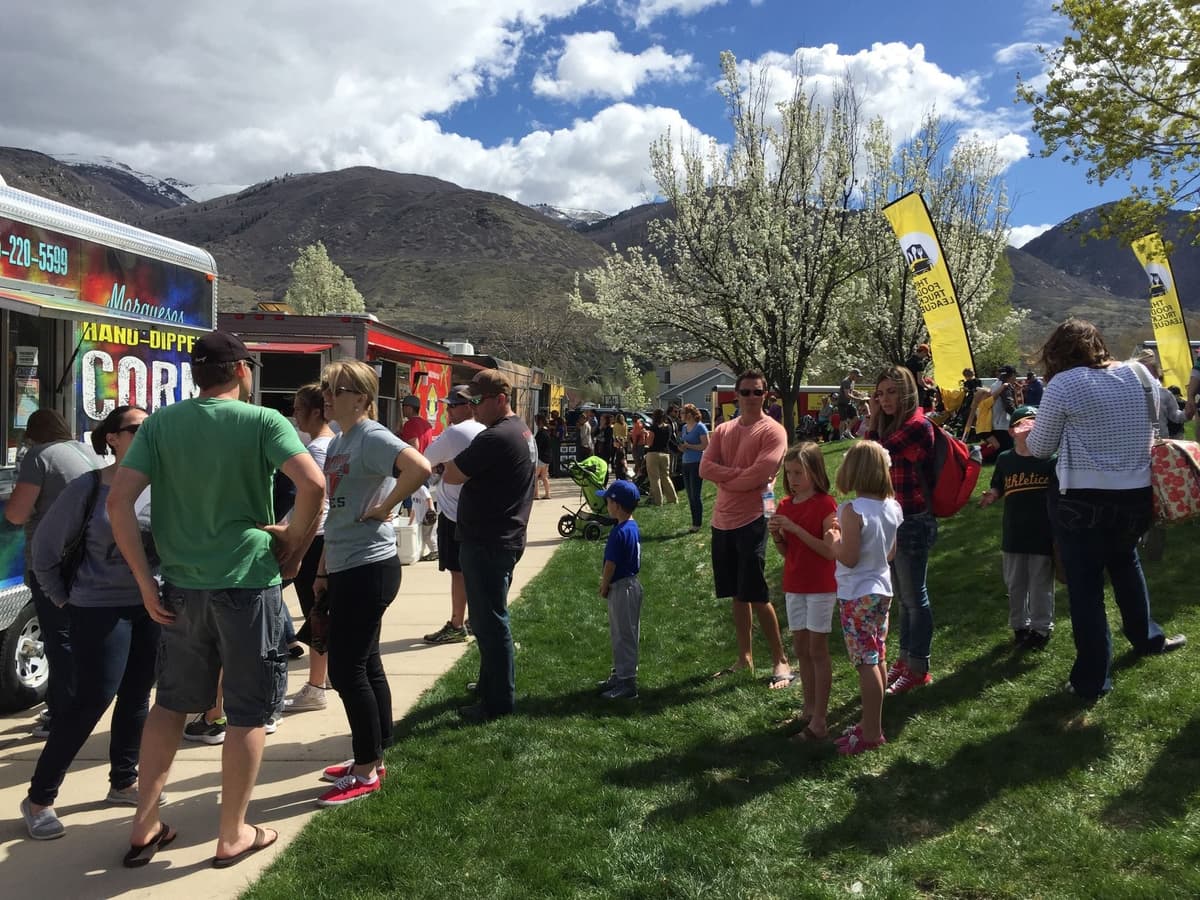
It's a common question in food truck catering and getting it wrong means either guests standing in 45-minute lines or paying for a second truck you didn't need.
The answer depends on three factors:
- your service window,
- your payment model,
- how fast people will arrive.
The Food Truck Catering Capacity Rule
Most food trucks can serve 80-100 people per hour in catered setups.
When meals are pre-selected and the host is paying, there's no payment friction slowing the line. Guests order, receive food, and move on.
For 150 people with a 2-3 hour service window, one truck usually works.
Last month at a South Jordan corporate event, one truck served 165 people in 2.5 hours. Not because guests were rushing, but because there was no payment friction and the truck specialized in fast-service bowls.
What it looked like:
- 80 people served in the first hour,
- 60 people in hour two,
- 25 stragglers in the final 30 minutes.
- Total service time: 2.5 hours.
- No line longer than 12 people at any point.
That's the standard pattern for catered events. One carefully selected truck from our massive food truck database handles 150 people efficiently when the set up is right.
When Two Trucks Make More Sense
That changes completely when guests pay for themselves.
When guests pay at the truck, service speed drops to 40-50 people per hour. Not because trucks are slow, but because each transaction includes menu decisions, payment processing, and small talk. That friction adds 30-45 seconds per person.
For 150 guests at a self-pay event, you're looking at 3+ hours to serve everyone with one truck. That might work for festivals where people trickle in over time. It does not work for wedding cocktail hours or corporate lunches where everyone arrives at once and expects to eat quickly.
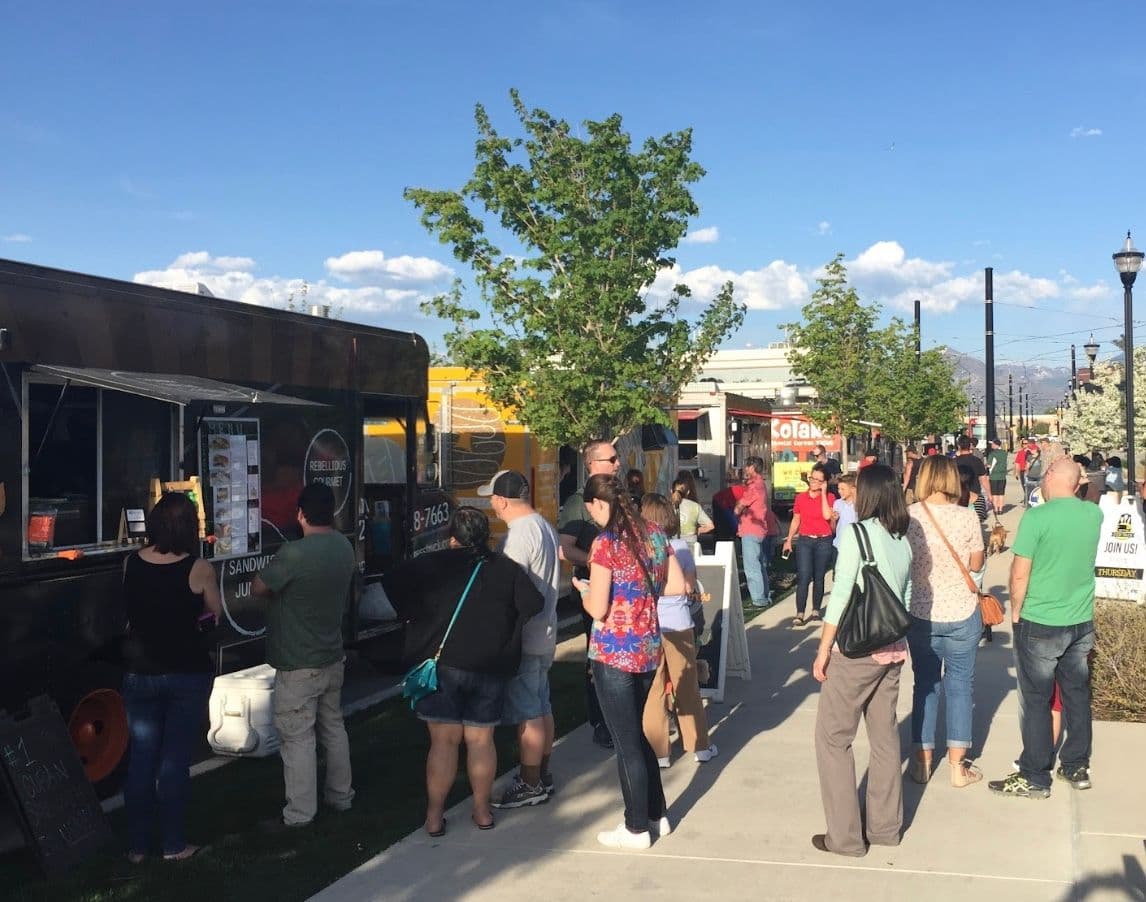
Short service windows require multiple trucks, regardless of guest count. If everyone needs to eat within 60 minutes, one truck can't physically serve fast enough.
What If You Get It Wrong?
Too few trucks = long lines, unhappy guests, and rushed service.
Too many trucks = lower sales per truck, disappointed vendors, and wasted budget.
We track service speed by truck and can predict capacity within 15 minutes for your specific setup. Not all trucks serve at the same speed.
Give us your guest count, service window, and event type, and we'll match you with trucks that can deliver on your timeline.
We handle the hard part, so you can focus on enjoying your event.
Share your upcoming event details with our catering team.
Frequently Asked Questions
Will my 150 guests spend the whole event standing in line?
Long lines usually happen because of meal indecision and payment friction like searching for credit cards and closing tabs. For groups of 150, we highly recommend a host-paid, catered model. When the menu is preplanned and payment is handled upfront, a single food truck can serve far more guests, much faster.
How do you know which trucks have fast vs. slow service?
We track this in our food truck database based on real event performance. When you book through the Food Truck League, we only recommend trucks that match your service speed needs.
What if I want to feed 150 people every week, not just once?
Recurring programs work slightly differently than one-off catering events because employees come down at different times during a lunch window (typically 11:00 AM – 2:00 PM). With a large group of people and a limited amount of time, scheduling several trucks eases the lines when there are many people with the same lunch times. Looking to set up a regular rotation? Read more in our guide
How can I make service faster without booking a second truck?
We recommend limiting the menu to 2–3 pre-selected options. This allows the kitchen to prep high volumes in advance and that dramatically speeds up service.