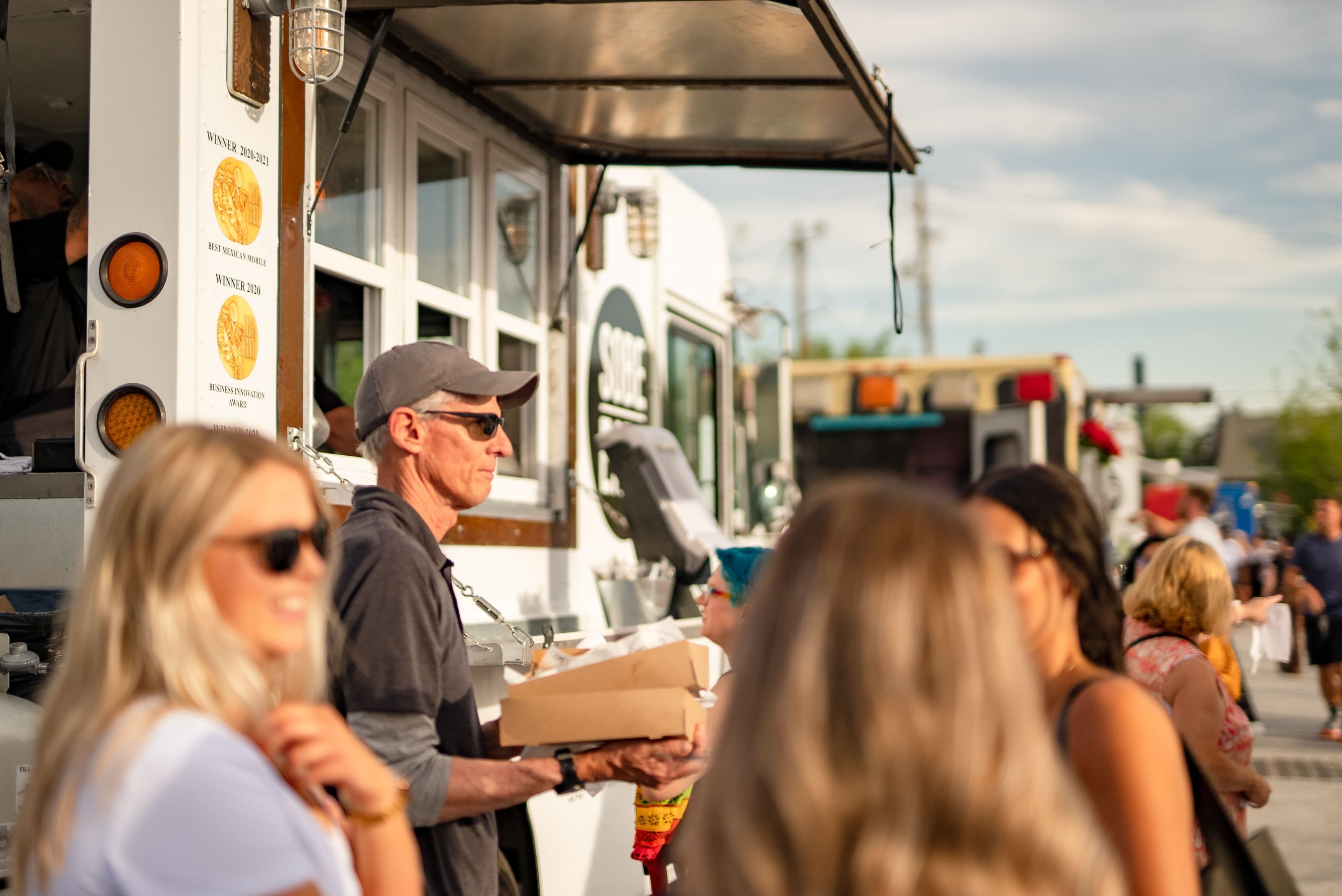
Why choose food trucks over traditional catering when both can feed a crowd well? The honest answer has less to do with the food itself and more to do with what happens in a guest's mind in the minutes before they eat it.
1. The Anticipation Effect Traditional Menus Don't Create
Research on dining psychology has found that anticipated pleasure, the mental preview of how enjoyable an experience is about to be, plays a measurable role in how much people end up enjoying a shared meal, and the effect is stronger in groups than when someone eats alone. A buffet line gives a guest almost nothing to anticipate. The food is already there, already decided, already the same as the last three events they attended.
A food truck window works differently. Guests watch the order ahead of them get built, smell it before it's their turn, and spend a few minutes imagining what they're about to eat. That waiting period is no longer just dead time, it's doing psychological work traditional catering misses entirely.
2. Watching Food Made Changes How It Tastes
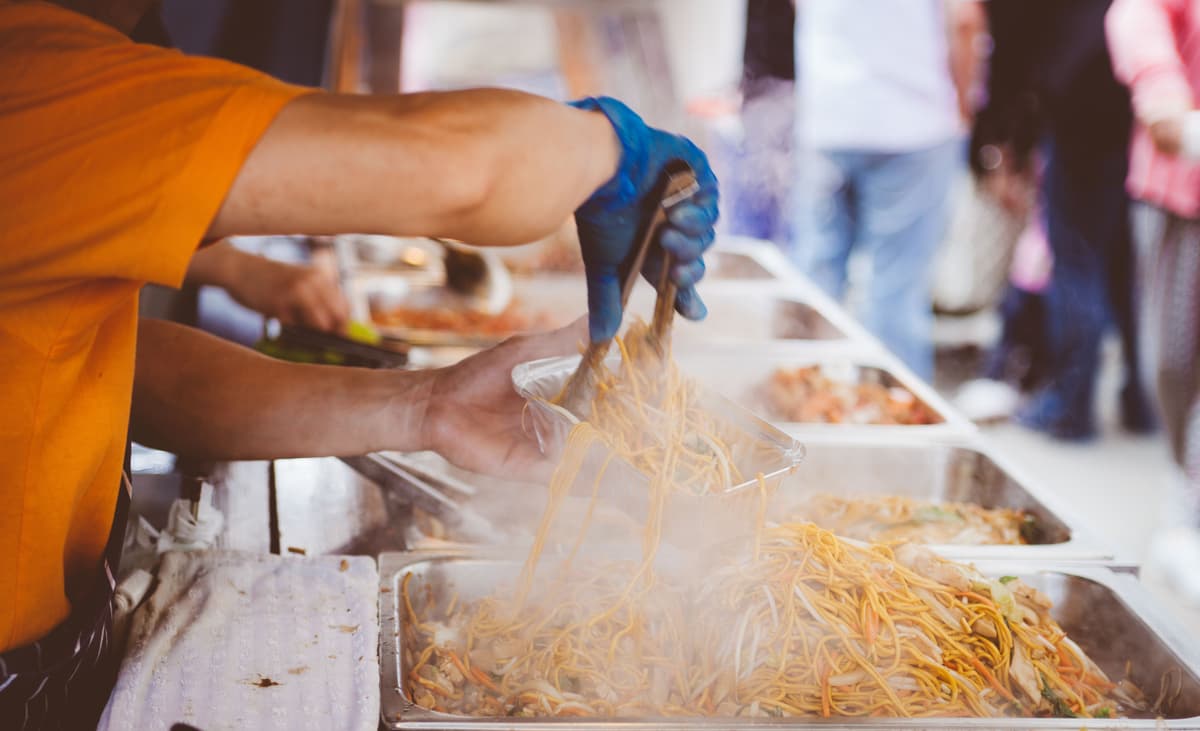
There's a reason open kitchens and chef's counters became popular in restaurants long before food trucks did. Watching food prepared in front of you changes the experience of eating it, not just the perception of freshness, but the actual enjoyment.
A food truck puts every guest at that counter. They see the tortilla hit the griddle. They watch their order get built exactly how they asked. Traditional catering, by comparison, hides all of that in a kitchen or a hotel pan on a buffet table.
The guest gets the outcome without any of the process, and the process genuinely does matter, more than most event planners expect.
3. Novelty Keeps the Story Going After the Event Ends
A rotating lineup of food trucks is never the same twice.
When the Food Truck League coordinates a corporate event, the trucks we recommend are chosen in part because they're not what that group had last time. Traditional catering menus tend to repeat, chicken or salmon, a pasta station, the same three desserts. After a few events, nobody's talking about the food anymore because there's nothing new to say about it.
A food truck with an unfamiliar menu gives guests something to talk about at their desks the next day. That conversation is behind why people remember one event over another. It's not the meal itself but more of whether the meal gave them a story.
Where Traditional Catering Still Wins
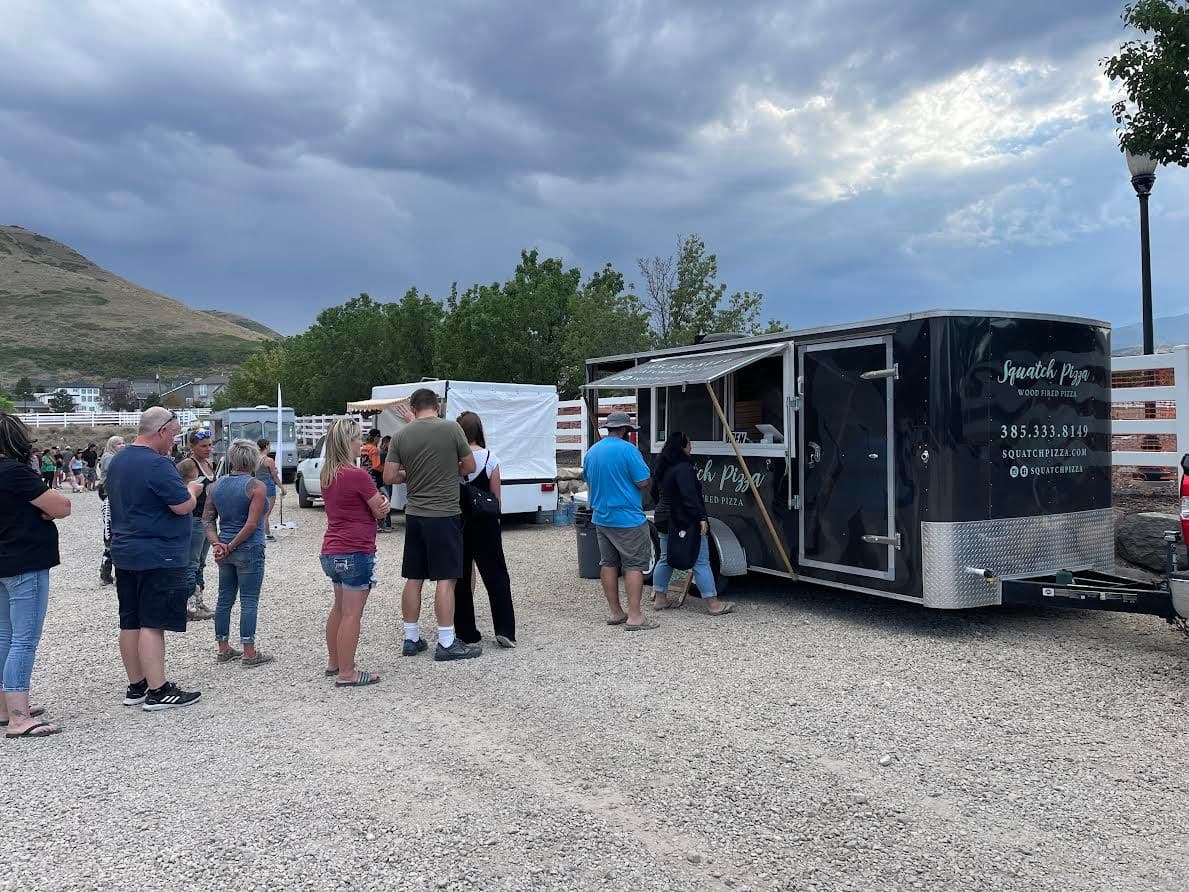
None of this makes food trucks the right call for every event. Traditional catering has two real advantages of its own. The main one is venue access: a truck needs vehicle clearance and parking space, and some venues, high-rise event floors, ballrooms without a loading dock, historic buildings with vehicle restrictions, simply can't accommodate one.
The second is pacing. A multi-course plated dinner creates its own anticipation, spread out course by course across the evening rather than concentrated at a single order window. That's a different psychological mechanism than a food truck's novelty and immediacy, but it's a genuine one. The choice between food trucks over traditional catering usually comes down to which of these two experiences fits the room. Our guide to choosing between food truck catering and traditional catering covers the practical side of that decision in more depth.
What This Means When You're Choosing Food Trucks Over Traditional Catering
If the goal is a casual, social, high-energy event where people mingle and talk, the psychology favors food trucks. The anticipation, the visible process, and the novelty all work in the same direction.
The Food Truck League has coordinated more than 15,000 events over 11+ years, working with a network of 200+ vetted trucks across Utah, Arizona, Dallas, and beyond. That experience is part of why our matching process starts with the kind of event being planned and not just the guest count. The trucks in our network are chosen with exactly this dynamic in mind: variety that keeps people curious, and reliability that means the novelty never comes at the cost of a smooth event.
If you're weighing which format fits what you're planning, our team can talk through it with you. Get in touch and we'll help you figure out what actually fits.
Frequently Asked Questions
Why choose food trucks over traditional catering for a corporate event?
Corporate events tend to repeat, the same office, the same coworkers, sometimes the same building lobby. A rotating truck lineup gives people something different to talk about each time, which is harder for a fixed catering menu to do without significantly higher cost.
What kind of event is a food truck not a good fit for?
Venue access is the real constraint. High-rise event floors, ballrooms without a loading dock, and buildings with strict vehicle restrictions can rule a truck out entirely. It's worth checking with your venue beforehand
Does variety matter more for one-time events or recurring ones?
It matters most for recurring events. A one-time event only needs to be memorable once. A recurring lunch program or community event needs fresh reasons for people to keep showing up, which is where a rotating truck lineup outperforms a repeating catering menu.