The food at a community event does more than feed people. It's the reason they show up, the thing that keeps them longer than they planned, and the reason they come back next week.
Choosing the wrong food setup is one of the most common reasons community events quietly fade out. Attendance spikes at the first one, drops by the third, and by the sixth nobody bothers. The good news: this is almost always a solvable problem.
These community event food ideas cover the formats that actually build and sustain attendance over time
What to Ask Before Choosing Your Community Event Food Ideas
A block party has different needs than a recurring monthly neighborhood night or a city-sponsored annual festival. Three questions worth answering first: How many people are you expecting? Is this a one-time event or recurring? And who owns the logistics, a paid coordinator, a volunteer board, or you alone? The answers narrow the list fast.
These community event food ideas cover what each one works best for, and which you're likely to think twice about.
1. Rotating Food Trucks
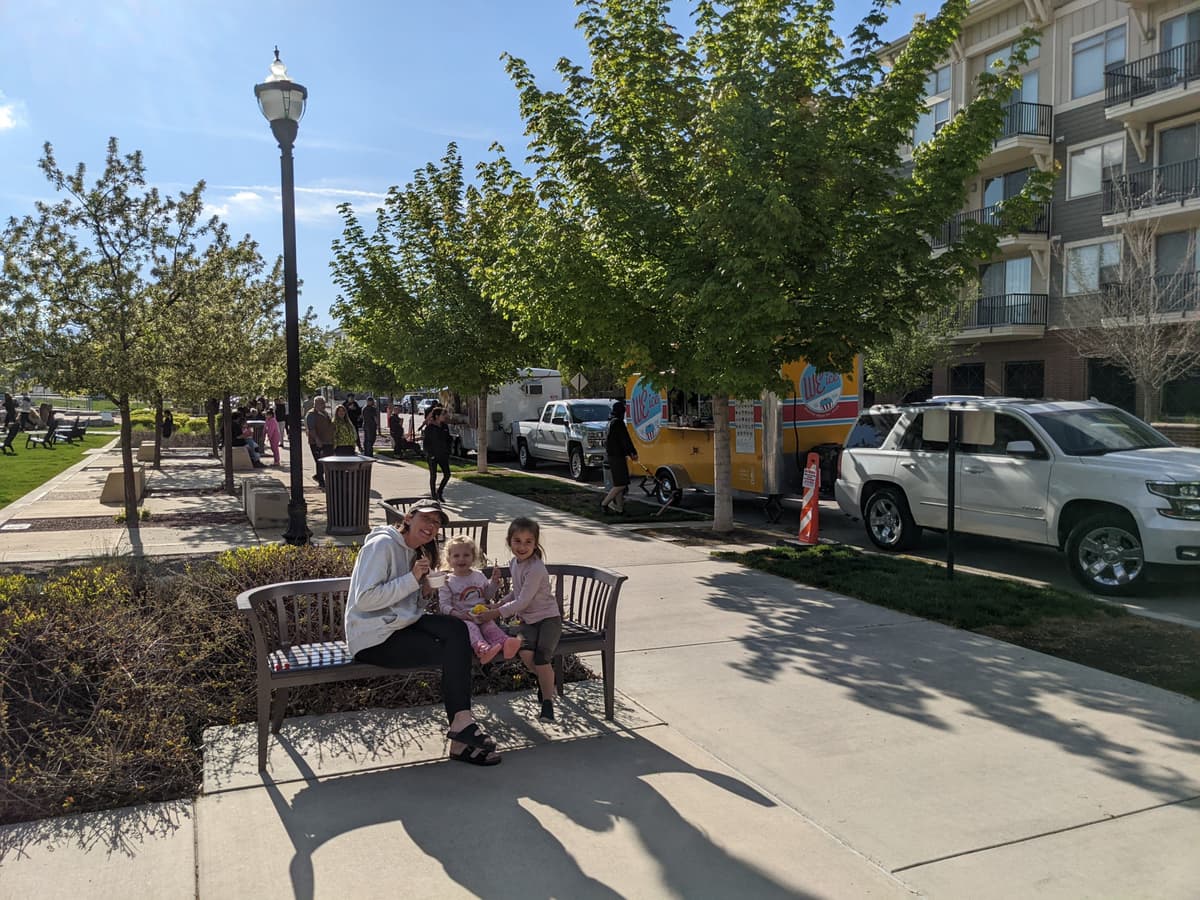
For community events that happen weekly or monthly, rotating food trucks are the format that consistently maintains the longest-running attendance. The variety is the mechanism. Thai food one week, smash burgers the next, wood-fired pizza the week after. People stay curious because they don't know exactly what's coming.
The logistical advantage is real. Trucks are self-contained. They don't need your kitchen, your power supply, or your volunteer staff. They show up, serve, and clean up after themselves.
Best for: HOA communities, apartment complexes, city parks, business improvement districts, and any recurring weekly or monthly format. If you're specifically running an HOA event, this article covers exactly how the model works for HOA communities. The Food Truck League has successfully run this model for over 11 years and 15,000+ events across Utah, Arizona, Dallas, Denver, and New Zealand. The format works because the variety does the work for you
2. Multi-Vendor Food Stations
For a block party, summer festival, or city event with 200+ attendees, a multi-vendor setup of two or three food operators covering different cuisine types, gives guests real variety without requiring a recurring vendor commitment. The challenge is coordination. Getting multiple vendors to the same location with matching quality, timing, and insurance takes real legwork. If you're managing it yourself, budget time for it. If your city or organization has an events coordinator, this is a reasonable handoff.
What it does well: variety at scale, vendor-specific loyalty, and a festival atmosphere that a single-vendor setup can't create.
3. Catered Meal Service
A catered meal such as a BBQ spread, taco bar, buffet from a local restaurant works well when the goal is simplicity and predictability. You know exactly what's coming, food quality is controlled, and logistics are minimal.
The downside shows up in recurring format and it lacks the freshness of food prepared on the spot. A catered BBQ the first time is a treat. The third time, it's just lunch. Attendance drops because the experience stops being worth leaving the house for.
For one-time events like a community welcome party or a neighborhood kickoff, catered service is often the right call. For anything recurring, expect attendance to plateau quickly.
4. Potluck-Style Community Dinners
Potlucks have a real advantage: they're personal. When a neighbor brings their grandmother's recipe, that's a conversation no catered tray can start. The shared act of cooking for each other builds connection in a way that's genuinely hard to replicate.
The ceiling is scale. Once you're past 50 or 60 people, potluck coordination reminds me of a spreadsheet problem, too many desserts, not enough protein, inconsistent food handling.
The magic doesn't survive the logistics.
5. Local Restaurant Pop-Ups
Partnering with a local restaurant to set up an off-site pop-up can bring neighborhood identity into a community event in a way that generic catering can't. The restaurant brings its regulars. The community event brings foot traffic and visibility. Done well, it's a genuine win for both.
The risk is reliability. Most brick-and-mortar restaurants don't have a dedicated event team. A staffing shortage or equipment failure can mean a last-minute cancellation with no backup.
6. Food Activity Stations
Cooking demonstrations, tasting stations, chili cook-offs, or "meet the chef" formats add an experiential layer to community events that pure food service doesn't. A chili cook-off alongside a food truck setup draws more people than either alone. A cooking demo at a farmers' market creates a natural gathering point.
These formats work best as supplements to a primary food option, not as a replacement. The activity gives people a reason to stay longer and something to talk about besides what they ate.
7. Recurring Food Truck Nights
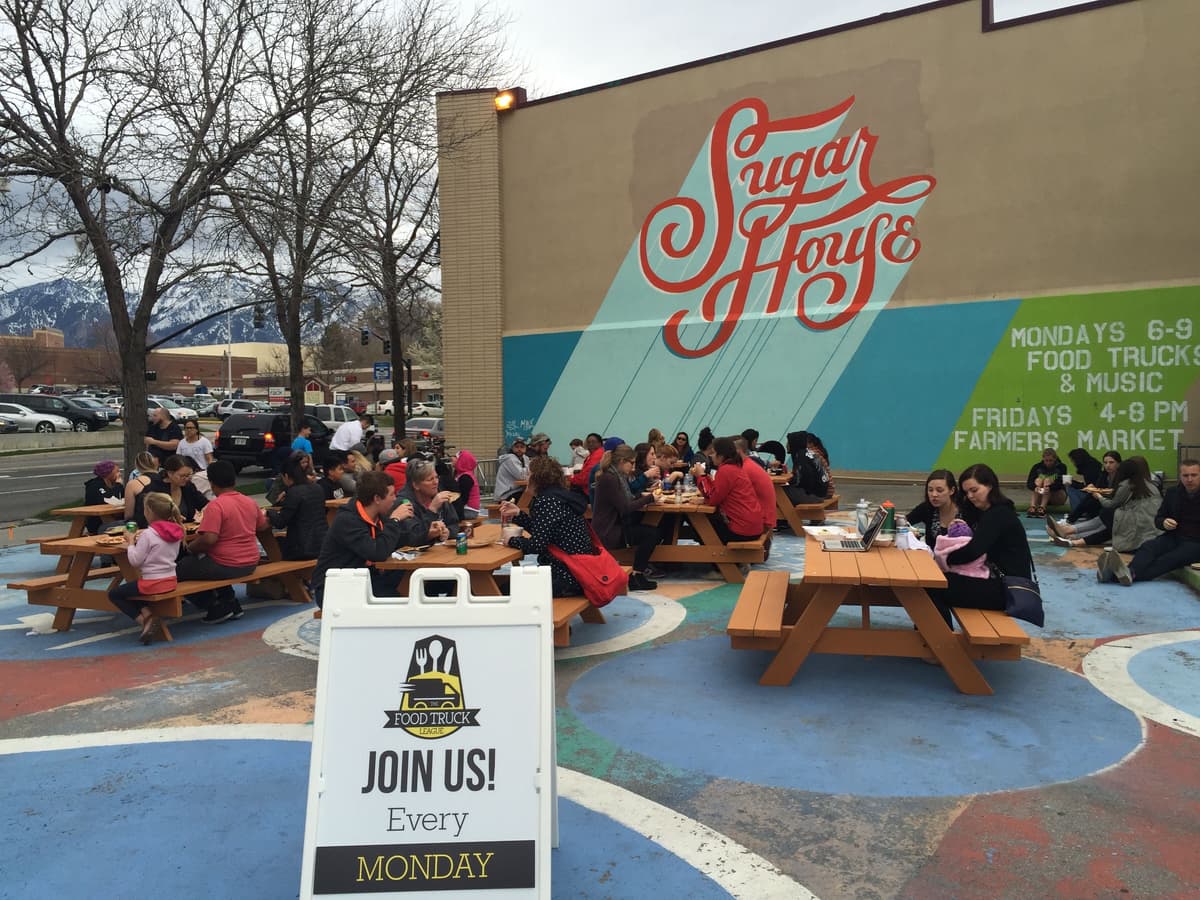
This is a different entry than number one, and worth separating. A one-time food truck event is an event. A recurring food truck night occuring on the same days each week, with rotating trucks and a consistent location is one of the best community event food ideas.
Over time, it becomes the thing your neighborhood does. People plan around it. New residents hear about it from neighbors. Kids have a favorite truck.
Communities that commit to a recurring format see attendance grow over the first six to twelve weeks as word spreads. Communities that treat food truck nights as occasional events see attendance plateau, then drop. Research from the U.S. Surgeon General underscores why this matters: consistent, recurring social touchpoints are among the most effective ways to reduce isolation and build genuine neighborhood connection.
If you're exploring community event food ideas for your neighborhood, city park, or apartment complex, Food Truck League can walk through whether your location is a fit, and if it is, the scheduling, truck rotation, and weekly marketing are fully handled.
Frequently Asked Questions
What food is best for a community event?
It depends on whether your event is one-time thing or likely recurring. For a single event, a catered setup or multi-vendor station gives you reliable variety. For recurring events, rotating food trucks are the format most likely to sustain strong long-term attendance because the lineup stays fresh each week.
How do you keep community events affordable for the hosting organization?
The self-pay food truck model removes the catering cost entirely. Residents purchase directly from the trucks, so there's no invoice landing on the HOA, city, or property management budget. The event pays for itself through individual sales.
How many food vendors do you need for a community event?
A general starting point: one vendor per 75 to 100 attendees for a one-time event. For recurring weekly events, anywhere from 3 to 7 food trucks is a common range depending on expected foot traffic, location size, and how spread out the event is across the space.
What makes a community food event sustainable over time?
A recurring schedule gives people something to plan around. A rotating food lineup gives them a reason to show up each time rather than assuming they've already seen what's there. Events that combine both reliably outperform one-time or occasional formats in attendance over the long run.